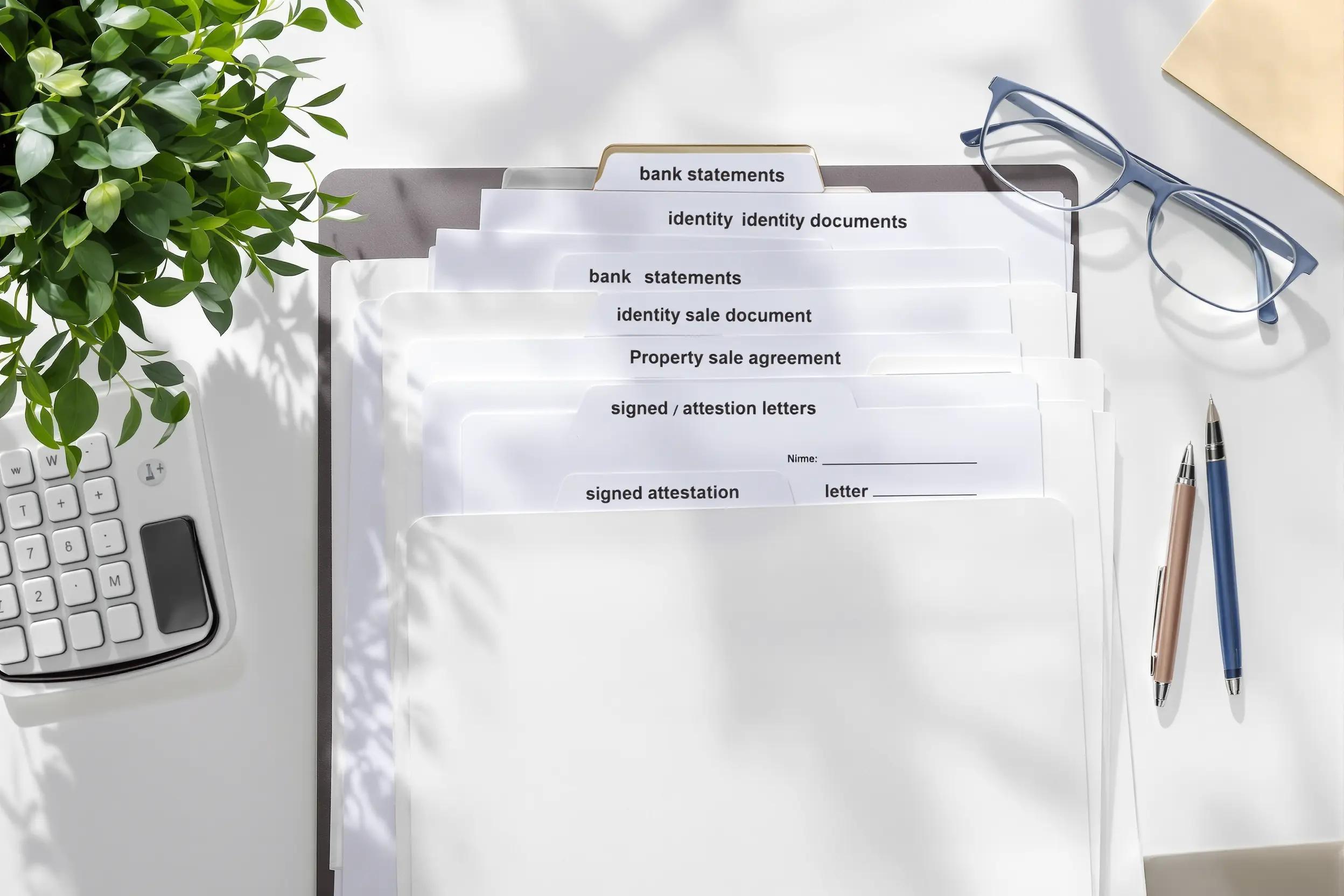
What Documents Do I Need for a Florida Mortgage?
Buying a home in Florida can feel exciting right up until the lender starts asking for paperwork. Suddenly, you are looking for old tax returns, downloading bank statements, searching for pay stubs, and wondering whether you have everything they need. Knowing what documents you need for a Florida mortgage ahead of time can make the application process much easier and help you respond quickly when your lender asks for something.
The exact paperwork depends on your income, employment, assets, credit profile, and the type of mortgage you are applying for. However, there are several documents that most borrowers should expect to provide.
Proof of Income
Your lender needs to verify that you have enough reliable income to repay the mortgage. For a traditional employee, this commonly means providing recent pay stubs and W-2 forms.
The CFPB’s mortgage application checklist recommends having pay stubs from the last 30 days and W-2 forms from the previous two years available.
Depending on your situation, you may also need documentation for income such as:
- Bonuses or commissions
- Retirement income
- Social Security benefits
- Pension income
- Rental income
- Alimony or child support
- Other regular sources of income
If you want the lender to consider a particular source of income, be prepared to show documentation supporting it.
Recent Bank Statements
Bank statements are another common part of a mortgage application. They help the lender understand your available assets and verify funds that may be used for your down payment and other home-buying expenses.
The CFPB recommends having the two most recent bank statements available when preparing a mortgage application packet.
It is also worth paying attention to large or unusual deposits. If a substantial amount of money recently appeared in your account, the lender may ask where it came from. You may need to provide documentation showing the source of those funds.
Tax Returns
Tax returns can become especially important if you are self-employed, own a business, receive certain types of income, or have a more complicated financial situation.
Many lenders may ask for recent federal tax returns when they need additional information to verify income. Federal mortgage rules recognize tax returns, W-2s, payroll records, and financial institution records as examples of documentation that may be used to verify income or assets.
If you are self-employed, expect that the lender may request more financial documentation than a borrower with a straightforward W-2 salary. The exact requirements can vary.
Identification and Personal Information
You will generally need documents that verify who you are. This can include a driver’s license or another acceptable form of identification.
You will also provide personal information such as your Social Security number as part of the mortgage application and credit-check process. The CFPB explains that six pieces of information are enough to trigger a lender’s obligation to provide a Loan Estimate: your name, income, Social Security number, property address, estimated property value, and desired loan amount.
Keep in mind that receiving a Loan Estimate is different from completing the lender’s full underwriting process. Additional documents are normally requested when the lender verifies the information in your application.
Proof of Your Down Payment
Your lender will want to know where your down-payment money is coming from.
This may involve providing savings or investment account statements showing that you have the necessary funds. If someone else is giving you money toward the purchase, the lender may also require documentation showing that the money is a permitted gift under the loan program and comes from an acceptable source.
For example, if you have been moving money between several accounts before buying a Florida home, keeping records of those transfers can make questions from the lender easier to answer.
Documentation for Other Assets
If you are using investments, retirement accounts, or other assets to help qualify for the mortgage or cover your purchase expenses, your lender may ask for statements or other documentation.
This could include:
- Investment account statements
- Retirement account statements
- Savings accounts
- Certificates of deposit
- Other financial assets
The important thing is to provide complete and current records rather than trying to guess which pages the lender wants.
Documents for Self-Employed Borrowers
Self-employed borrowers often have a little more paperwork to prepare.
Instead of simply providing W-2s and recent pay stubs, you may need tax returns and additional documentation related to your business and income. The CFPB specifically notes that self-employed borrowers and people with irregular or seasonal income may need more extensive documentation, with requirements varying according to the lender and individual circumstances.
That does not necessarily mean getting a mortgage is more difficult. It simply means the lender may need a clearer picture of how your income is earned and whether it is expected to continue.
Documents Related to the Property
Once you have a specific home under contract, the lender will also need information about the property itself.
The property address and estimated value are part of the information needed for a Loan Estimate. As the mortgage moves forward, additional property-related documents may be required depending on the transaction and loan program.
Your lender or mortgage professional should tell you exactly what is needed for the particular property and loan.
What If the Lender Asks for More Documents?
It is normal for a lender to request additional paperwork during underwriting. You may provide one set of documents initially and then receive another request a few days later.
Try not to see every additional request as a problem. Underwriters are verifying the information used to evaluate the mortgage.
The CFPB recommends submitting complete documents, keeping your originals, and responding promptly when the lender requests additional information.
It is also smart to keep your financial documents organized throughout the home-buying process. Recent pay stubs and bank statements may need to be updated if the mortgage process takes some time.
4 FAQs About Florida Mortgage Documents
1. What documents are usually needed for a Florida mortgage?
Common documents include recent pay stubs, W-2s, tax returns when required, bank statements, proof of assets and down-payment funds, identification, and documentation for other income. Requirements vary by lender and loan type.
2. Do self-employed borrowers need more mortgage documents?
Often, yes. Self-employed borrowers may need additional tax and business-income documentation so the lender can properly verify their income. The exact requirements depend on the lender and financial situation.
3. Why does a mortgage lender ask about large bank deposits?
A lender may need to verify the source of significant deposits, particularly when the money could be used for the down payment or closing. Keeping records that explain transfers or other large deposits can help avoid delays.
4. Do I need all my documents before getting a Loan Estimate?
Not necessarily. Under federal rules, a lender can provide a Loan Estimate after receiving six key pieces of information, and it cannot require documents such as W-2s or pay stubs as a condition of providing that estimate. Additional documentation is generally needed later to verify the information in the application.
Final Thoughts
Getting your mortgage paperwork together may not be the most exciting part of buying a Florida home, but it can make the process feel much more manageable. Start with your recent income records, bank statements, tax documents, identification, and proof of your available funds.
Keep everything organized and respond quickly when your lender asks for an update or additional document. Most importantly, remember that there is no single document checklist that works for every borrower. Your lender may request additional information based on your loan program, employment, income, assets, and the property you are buying.