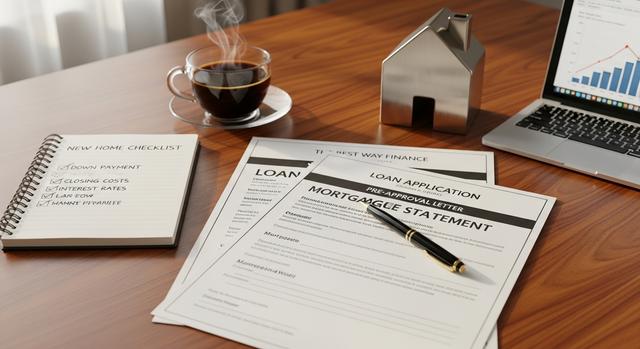
Jumbo Mortgage Requirements in Florida
Buying a higher-priced home in Florida can be exciting, but financing it is a little different from getting a standard mortgage. When the amount you need to borrow exceeds the applicable conforming loan limit, you may need a jumbo mortgage. These loans are considered non-conforming, so lenders generally apply their own underwriting standards rather than following one universal set of requirements.
That is why understanding Jumbo Mortgage Requirements in Florida before making an offer can make the home-buying process much easier. A lender will usually look closely at your credit, income, debts, assets, down payment, and the property itself.
What Is a Jumbo Mortgage?
A jumbo mortgage is a home loan that is larger than the conforming loan limit that applies to the property. The Federal Housing Finance Agency establishes conforming loan limits each year, and loans above those limits are generally considered jumbo loans.
Florida has a wide range of real estate markets, from waterfront homes in South Florida to expensive properties around Tampa, Orlando, Naples, Sarasota, and other growing communities. Depending on the property’s price and the amount being borrowed, a buyer may need financing outside the standard conforming mortgage system.
Unlike conforming loans, jumbo mortgages can vary significantly from one lender to another. The CFPB notes that non-conforming loan eligibility, pricing, and features can vary widely between lenders.
Credit Score Requirements
Credit is one of the first things a jumbo lender may examine.
There is no single credit score required for every jumbo mortgage in Florida. Some lenders may accept borrowers with lower scores when other parts of the application are strong, while others may set higher minimums, particularly for larger loan amounts.
For example, one Florida lender currently advertises minimum FICO requirements around 720 for certain jumbo products.
A stronger credit profile can also help when comparing interest rates and loan terms. Before applying, it can be worth reviewing your credit reports and avoiding unnecessary new debt or major financial changes.
Down Payment and Loan-to-Value
Jumbo mortgages often require more money upfront than some conventional financing options, although the exact amount depends on the lender, property, borrower profile, and loan size.
Some jumbo programs may allow relatively high loan-to-value ratios, while others may require a substantially larger down payment. For example, Florida Capital Bank currently lists jumbo products with different maximum LTV levels depending on the program.
This means you should not assume that every jumbo mortgage requires 20% down—or that every lender will accept the same amount.
A larger down payment can reduce the amount you borrow and may strengthen your application, but you should also consider how much cash you want to keep available after closing.
Income and Employment Documentation
Lenders need to determine whether you have enough income or assets to comfortably repay the mortgage.
You may be asked for documents such as pay stubs, W-2s, tax returns, bank statements, investment-account statements, and information about other sources of income. Self-employed borrowers may face additional documentation requirements.
Federal mortgage rules require creditors to consider and verify relevant income or assets, debts, and other financial obligations when making an ability-to-repay determination.
For someone with multiple businesses, investment income, bonuses, rental properties, or other complicated finances, it is especially important to understand how the lender will calculate qualifying income before choosing a loan program.
Debt-to-Income Ratio Matters
Your debt-to-income ratio, or DTI, compares your monthly debt obligations with your qualifying income.
Jumbo lenders often want to see a manageable level of existing debt because a large mortgage creates a significant monthly obligation. However, there is no single DTI number that applies to every jumbo mortgage.
A borrower with substantial assets, strong credit, stable income, or other financial strengths may receive different underwriting treatment than someone with a similar income but fewer assets or a more complicated debt profile.
Cash Reserves Can Be Important
Having enough money for the down payment is not necessarily the end of the financial review.
Some jumbo lenders may want borrowers to maintain reserves after closing. These reserves can provide a financial cushion for mortgage payments and other expenses.
The amount required can depend on factors such as the loan size, property type, occupancy, credit profile, and lender’s guidelines. This is one reason buyers should avoid putting every available dollar into the down payment without first discussing the lender’s reserve requirements.
The Property Will Be Closely Reviewed
The lender is not only evaluating you. The property matters too.
A jumbo mortgage generally involves a property appraisal to determine whether the home’s value supports the proposed loan. More unusual or expensive properties can sometimes create additional underwriting questions because finding comparable sales may be more difficult.
Property type, location, condition, insurance considerations, and whether the home will be a primary residence, second home, or investment property can also affect available loan programs.
Jumbo Mortgage Rates and Terms
Jumbo mortgage rates are not necessarily the same as conventional mortgage rates. Pricing depends on market conditions as well as the lender, borrower profile, loan amount, property, and other factors.
You may find fixed-rate and adjustable-rate jumbo options, with terms varying by lender. Some Florida lenders currently offer 15-year and 30-year fixed jumbo products as well as adjustable-rate options.
Instead of comparing only the advertised interest rate, look at the complete cost of the loan, including fees, points, closing costs, and other terms.
How to Prepare for a Jumbo Mortgage
Before applying, gather your financial documents and review your credit and existing debts. Know roughly how much you want to put down and how much cash you want to keep available after closing.
It is also smart to compare several lenders. The CFPB specifically recommends shopping around for non-conforming loans because eligibility, pricing, and features can vary considerably between lenders.
Getting preapproved before seriously shopping for a high-value Florida property can also give you a clearer idea of your purchasing range.
4 FAQs About Jumbo Mortgages in Florida
1. What credit score is needed for a jumbo mortgage in Florida?
There is no universal minimum score for every jumbo loan. Lender requirements vary, but stronger credit can improve your chances of qualifying and may help with loan pricing.
2. How much down payment is required for a Florida jumbo mortgage?
The required down payment varies by lender, loan size, property, and borrower profile. Some programs allow relatively high LTV ratios, while others require larger down payments.
3. Do jumbo mortgage lenders require cash reserves?
Many jumbo programs may require or strongly evaluate post-closing reserves. The amount can vary depending on the lender, loan amount, property, and overall financial profile.
4. Can self-employed buyers qualify for a jumbo mortgage in Florida?
Yes. Self-employed borrowers can qualify, but lenders may require additional documentation to verify income and financial stability. Tax returns, business records, bank statements, and other documentation may be requested.
Final Thoughts
A jumbo mortgage can make it possible to finance a higher-priced Florida home, but qualifying usually requires more detailed financial preparation than a standard mortgage. Credit, income, debt, assets, down payment, reserves, and the property itself can all influence the approval decision.
Most importantly, do not assume that one lender’s requirements represent every jumbo program. Comparing lenders and understanding the complete cost of each option can help you choose financing that fits both the property you want and your long-term financial plans.