
Jumbo Mortgages in Tampa: Requirements and Options
Buying a higher-priced home in Tampa can change the mortgage conversation pretty quickly. Once the amount you need to borrow goes beyond the local conforming loan limit, a standard conventional mortgage may no longer be enough. That is where Jumbo Mortgages in Tampa come into the picture. These loans are designed for larger financing needs, but they also come with their own qualification rules, documentation requirements, and lender guidelines.
For 2026, the conforming loan limit for a one-unit property in Hillsborough County is $832,750. A loan amount above that threshold generally falls into jumbo territory. The important detail is that the limit applies to the loan amount, not simply the home’s purchase price.
When Do You Need a Jumbo Mortgage in Tampa?
Imagine you are buying a $1 million home. You might assume that automatically means you need a jumbo loan, but the down payment changes the calculation.
If you put enough money down to keep the mortgage at or below the conforming limit, you may not need jumbo financing. If the amount you need to borrow exceeds $832,750, however, a jumbo mortgage may be necessary for a one-unit home in Hillsborough County.
This is one reason it is worth looking at the numbers before making an offer. The purchase price, down payment, loan amount, and property location all work together.
What Are the Main Jumbo Mortgage Requirements?
Jumbo lenders generally take a closer look at a borrower’s overall financial position because these loans fall outside standard conforming guidelines. Requirements vary from lender to lender, but common considerations include credit, debt, income, assets, down payment, and cash reserves.
Credit Score
A strong credit profile can make a significant difference. Many jumbo programs look for credit scores around 700 or higher, although the exact requirement depends on the lender, loan amount, property, and other factors. Some programs have different thresholds depending on the borrower’s overall financial profile.
Down Payment
A 20% down payment is not necessarily required for every jumbo mortgage. Some Tampa programs advertise financing with down payments around 10%, while other lenders may require more depending on the loan size and borrower profile.
Putting more money down can reduce the amount borrowed, but it also means tying up more of your cash in the property. That tradeoff is worth discussing before deciding how much to put down.
Cash Reserves
Jumbo lenders may want to see money remaining after closing rather than having nearly all available funds disappear into the down payment and closing costs.
Reserve requirements can vary substantially. Some Tampa jumbo programs reference six months of mortgage payments or more, while requirements may increase for larger loan amounts or particular property types.
What Income Documentation Is Needed?
Jumbo underwriting can involve detailed documentation of income and assets.
A typical application may involve recent pay stubs, W-2s or 1099s, tax returns, bank statements, investment accounts, and documentation explaining significant deposits or other assets. Self-employed borrowers may face additional documentation requirements.
The good news is that jumbo financing is not limited to one type of borrower. Depending on the program, lenders may consider W-2 income, self-employment income, bank statements, asset-based qualification, and other documentation approaches.
What Types of Tampa Properties Can Jumbo Loans Finance?
Jumbo mortgages can be used for different types of residential properties depending on the specific lender and program.
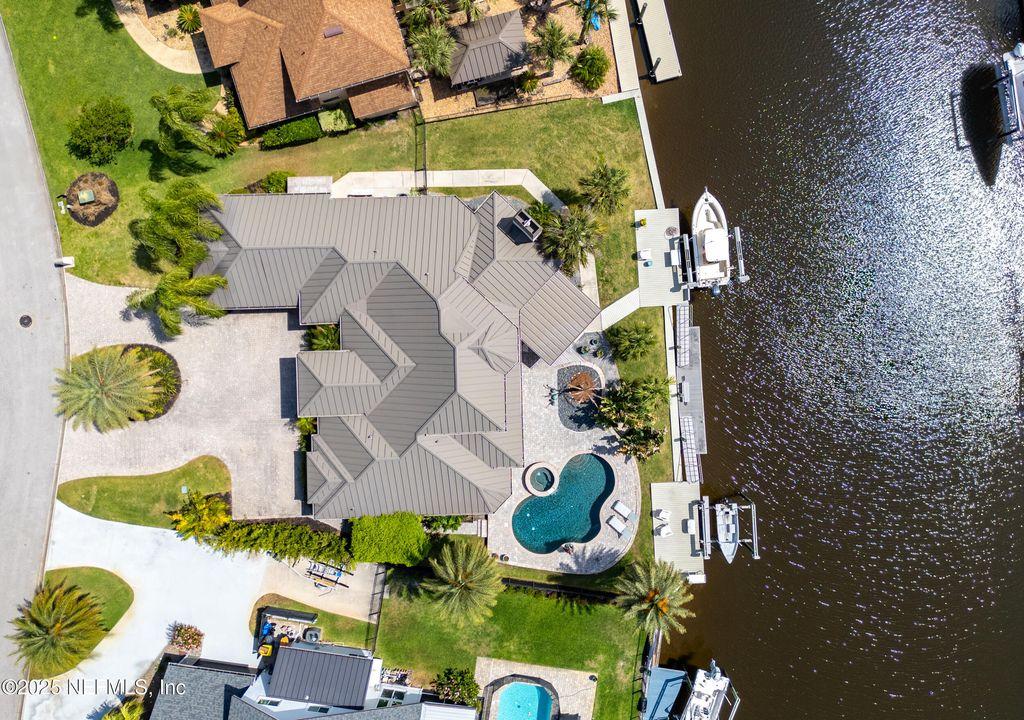
A borrower may be looking at a large single-family home, luxury condominium, townhome, second home, or another eligible property. Waterfront properties can also present additional considerations because insurance, flood zones, property value, and appraisal issues may affect underwriting.
That means the lender’s property guidelines matter just as much as the borrower’s financial qualifications.
Fixed-Rate or Adjustable-Rate Jumbo Mortgage?
Borrowers may have both fixed-rate and adjustable-rate choices.
A fixed-rate mortgage provides a consistent principal-and-interest payment structure over the selected term. An adjustable-rate mortgage can start with a different rate structure and may adjust later according to the loan’s terms.
Neither option automatically fits every buyer. Someone planning to stay in a Tampa property for many years may approach the decision differently from someone expecting to move or refinance sooner.
Why Comparing Jumbo Lenders Matters
Jumbo mortgages do not follow one universal set of lender requirements. Because they are nonconforming loans, individual lenders can establish their own underwriting standards and program options.
That can affect:
- Minimum credit requirements
- Down payment requirements
- Reserve requirements
- Maximum loan amounts
- Income documentation
- Property eligibility
- Fixed and ARM options
- Closing costs and pricing
So if one lender says you need a particular down payment or reserve level, that does not necessarily mean every jumbo lender will use exactly the same requirement.
4 FAQs About Jumbo Mortgages in Tampa
1. What is considered a jumbo mortgage in Tampa in 2026?
For a one-unit property in Hillsborough County, the 2026 conforming loan limit is $832,750. A loan amount above that limit generally falls into jumbo financing.
2. Do I need 20% down for a Tampa jumbo mortgage?
Not necessarily. Some jumbo programs allow down payments below 20%, but requirements vary by lender, loan amount, property type, credit profile, and other factors.
3. What credit score is needed for a jumbo loan?
Many jumbo programs look for a credit score around 700 or higher, while some lenders may require higher scores depending on the loan and borrower profile.
4. Can self-employed borrowers qualify for a jumbo mortgage in Tampa?
Yes. Some jumbo programs accommodate self-employed borrowers, although income verification can involve additional documentation. Certain lenders also offer alternative qualification options, depending on the program.
Final Thoughts
A jumbo mortgage is not simply a conventional mortgage with a bigger number attached to it. The amount you want to borrow can bring different underwriting standards, larger reserve expectations, more documentation, and greater variation between lenders.
For Tampa buyers considering an expensive home, it can be helpful to calculate the actual loan amount before assuming jumbo financing is required. From there, comparing available programs can give you a clearer picture of the down payment, reserves, documentation, and monthly payment you may need to plan for.
Mortgage requirements can change and individual lenders apply their own guidelines, so current terms should always be confirmed with the lender or mortgage professional handling the application.