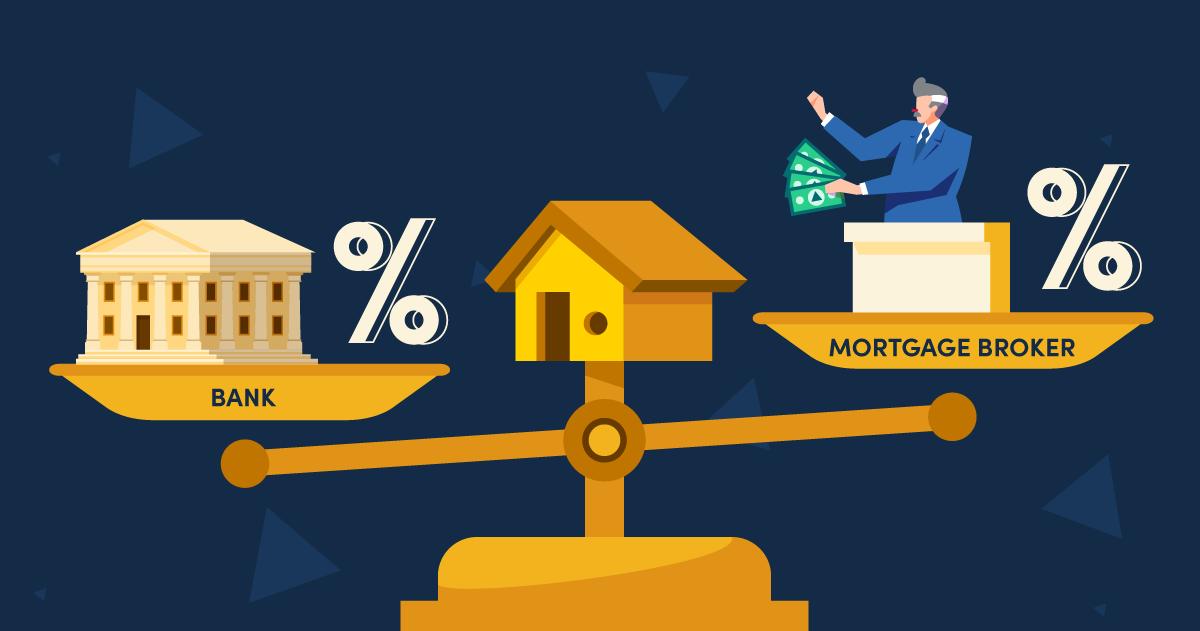
Mortgage Broker vs Bank in Florida
When you are shopping for a home loan, you may find yourself comparing a mortgage broker with a traditional bank. At first, the two can seem pretty similar because both can help you arrange financing for a home. The difference becomes clearer when you look at where the loan comes from, how many options you can compare, and how the person helping you gets paid. Understanding the difference between a Mortgage Broker vs Bank in Florida can make it easier to decide which route fits your situation.
How a Mortgage Broker Works
A mortgage broker is essentially an intermediary between you and mortgage lenders. The broker does not typically provide the money for your mortgage. Instead, they work with lenders and help you find a loan that may fit your financial situation.
The Consumer Financial Protection Bureau explains that mortgage brokers typically work with multiple lenders, while a lender makes the mortgage directly.
That can be useful if you do not want to contact several lenders yourself. Instead of starting from scratch with each company, you can work with one broker who may have access to different loan programs and lending sources.
How a Bank Works
When you apply directly through a bank, you are dealing with the institution that provides its own mortgage products. A loan officer at the bank generally works within that lender’s available programs and underwriting requirements.
This can make the process feel more straightforward. If you already bank with a particular institution and have a good relationship with it, you may also prefer having your accounts and mortgage handled under the same roof.
The tradeoff is that you are generally comparing that bank’s mortgage options rather than having a broker shop across multiple lenders for you.
Broker vs Bank: The Main Difference
The simplest way to think about it is this:
| Mortgage Broker | Bank |
|---|---|
| May work with multiple lenders | Generally provides its own loan products |
| Shops among available lending options | Offers products from that institution |
| Can save you time comparing lenders | Direct relationship with the lender |
| May be useful for unusual loan situations | Can be convenient for straightforward financing |
| Compensation may come from borrower or lender | Bank pays its own loan staff under its compensation structure |
Neither option is automatically cheaper or better. Your financial situation and the actual loan offers you receive matter more.
Which One Can Offer the Better Rate?
This is where things can get confusing.
A mortgage broker may have access to rates from several lenders, which gives you more options to compare. But that does not mean a broker will always beat a bank.
A bank may offer competitive pricing on a particular mortgage product, especially if it has a program that fits your situation well.
Instead of assuming that brokers always have lower rates or banks always have better deals, compare the actual offers.
The CFPB recommends shopping around and comparing multiple mortgage offers, including interest rates, APRs, fees, and other loan terms.
What About Fees?
This is another area where borrowers need to look beyond the headline rate.
Mortgage brokers may receive a loan-specific fee or commission, and that compensation can be paid by the borrower or lender depending on the arrangement.
A bank also has costs associated with originating a mortgage, including lender and closing charges.
So instead of asking only, “Does the broker charge a fee?” ask what the complete mortgage will cost.
Look at:
- Interest rate
- APR
- Points
- Origination charges
- Broker compensation
- Lender fees
- Closing costs
- Monthly payment
- Cash needed at closing
A mortgage with a lower advertised rate is not necessarily the cheapest mortgage overall.
When a Mortgage Broker May Make Sense
A broker can be particularly useful when your situation does not fit neatly into a basic mortgage application.
For example, you may be self-employed, looking for a jumbo loan, buying an investment property, purchasing a second home, or dealing with income that requires additional documentation.
In those situations, having someone who can compare different lenders may save you time.
It can also be useful if you simply do not want to spend your evenings contacting banks and comparing mortgage programs.
When a Bank May Make More Sense
Going directly to a bank can be appealing if you already know which lender you want to use or have a straightforward financial situation.
Some borrowers also prefer dealing directly with the institution providing the mortgage. If the bank offers competitive terms and the loan program fits your needs, there may not be much reason to add another step.
Convenience can matter too. If you already have checking, savings, or other financial accounts with the bank, having everything in one place may feel easier.
Florida Buyers Have Plenty to Compare
Florida has a wide variety of housing markets and property types. Someone purchasing a condo in Miami may have very different financing needs from someone buying a suburban home in Orlando or a waterfront property near Tampa.
That is why your property and loan situation should be part of the comparison.
A broker with experience in your type of transaction may be helpful, but a bank with a strong mortgage program for your situation could be equally competitive.
Do Not Choose Based on the Rate Alone
Imagine a broker offers a 6.25% rate while a bank offers 6.35%.
At first glance, the broker appears to win.
But what if the broker’s loan includes several thousand dollars more in upfront points and fees? The difference may not be as attractive as it initially appeared.
This is why the CFPB recommends comparing Loan Estimates from multiple lenders. A Loan Estimate gives you standardized information about the loan’s rate, payments, and costs so you can make a more meaningful comparison.
Can You Compare a Broker and a Bank?
Absolutely. In fact, this may be one of the better ways to shop.
You can speak with a mortgage broker and a few direct lenders, then compare the offers you receive.
The CFPB recommends contacting multiple lenders and says borrowers who shop around can potentially save thousands of dollars.
Try to compare similar loan scenarios so the numbers are meaningful. If one quote is based on a different loan amount, term, down payment, or loan type, the comparison may not be fair.
FAQs
1. Is a mortgage broker cheaper than a bank in Florida?
Not necessarily. A broker may find a competitive loan through multiple lenders, but broker compensation and other costs need to be considered. Compare the complete loan offer rather than assuming one option will always be cheaper.
2. Can a mortgage broker get a better rate than a bank?
Possibly, but there is no guarantee. Brokers may have access to multiple lenders, while banks generally offer their own mortgage products. Your credit, income, property, loan type, and other factors will influence the rate you receive.
3. Should I talk to both a mortgage broker and a bank?
Yes. Comparing both can give you a better idea of what is available. Ask for comparable loan offers and review the interest rate, APR, fees, points, and closing costs.
4. What should I compare when choosing between a broker and a bank?
Look at the complete cost of the mortgage rather than just the interest rate. Compare the APR, loan terms, points, lender or broker fees, closing costs, monthly payment, and cash required to close.
Final Thoughts
The choice between a mortgage broker and a bank in Florida really comes down to what works best for your particular mortgage. A broker can give you access to multiple lenders and may save you time, while a bank can provide a direct path to its own mortgage products.
You do not have to decide based on reputation or advertising alone. Get actual loan offers, compare the numbers carefully, ask about every fee, and look at the total cost. Sometimes the broker will come out ahead. Other times, the bank will. The best choice is the one that gives you a mortgage you understand and can comfortably afford.