What Credit Score Do I Need to Buy a House in Florida?
Buying a home is exciting until you start looking at your credit score and wondering whether it is actually high enough. If you are asking, “What credit score do I need to buy a house in Florida?” there is no single number that works for every buyer. The score you need can depend on the type of mortgage, your down payment, debt, income, lender requirements, and the rest of your financial profile.
A score around 620 is often associated with conventional mortgage eligibility, but some government-backed loans may allow lower scores. At the same time, having a higher score can give you access to more loan choices and potentially better interest rates.
Is 620 a Good Credit Score for Buying a Florida Home?
A 620 credit score is an important benchmark for many conventional mortgages. Fannie Mae’s current guidance lists 620 as the minimum score for certain manually underwritten fixed-rate loans, although its automated underwriting system does not require a specific minimum third-party credit score and evaluates the borrower’s overall risk profile.
That does not mean a 620 score automatically gets you approved. The lender will still consider your income, debts, assets, down payment, credit history, property, and other factors.
It is also possible for two buyers with similar credit scores to receive different mortgage offers because the rest of their financial situations are different.
What About FHA Loans?
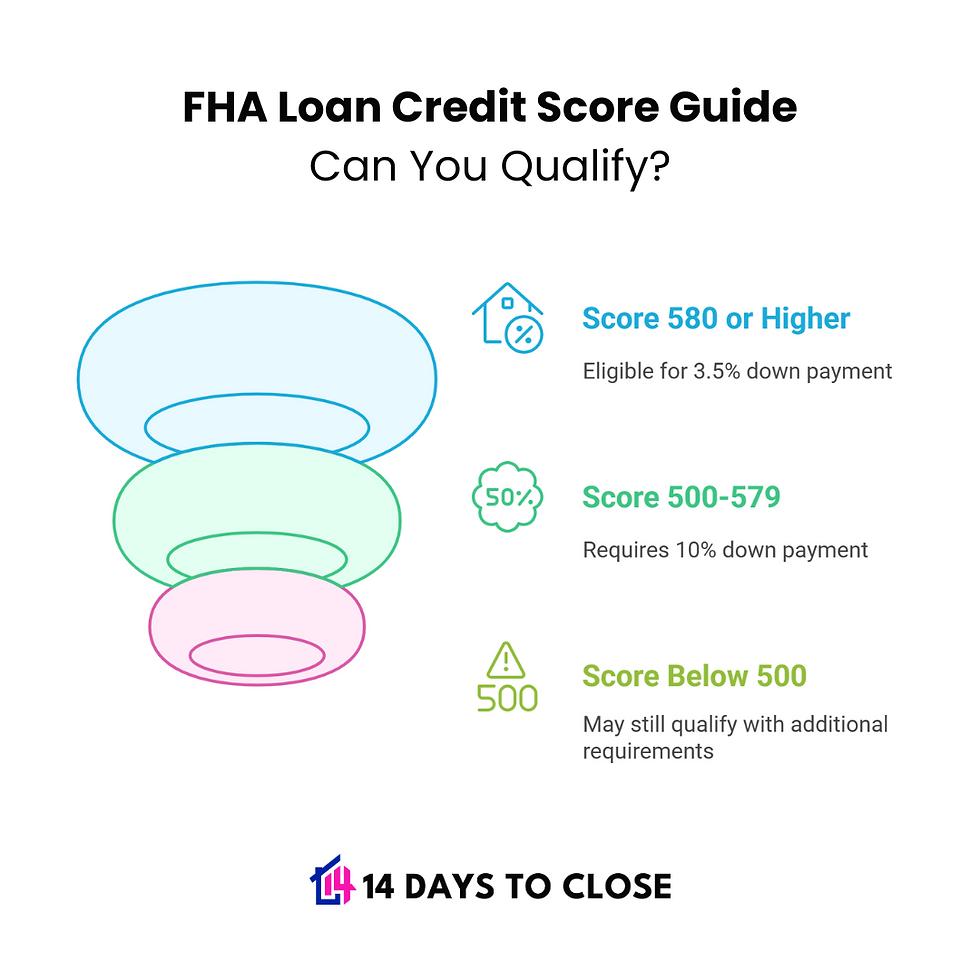
FHA financing can be an option for buyers whose credit score is lower than what is commonly expected for conventional financing. Under FHA guidelines, borrowers with a minimum decision credit score of 580 can qualify for the standard maximum financing, while scores from 500 to 579 are subject to a higher minimum down payment requirement.
The CFPB notes that FHA loans allow down payments as low as 3.5% and can accommodate lower credit scores than many conventional loans. However, FHA loans require mortgage insurance, so a lower credit-score requirement does not automatically mean the loan will cost less overall.
What Credit Score Is Considered Good for a Mortgage?
There is a difference between having enough credit to qualify and having a credit profile that may help you receive more favorable terms.
The CFPB says borrowers with scores in the mid-to-high 700s or above generally receive the lowest mortgage rates, while borrowers in the 680–740 range may pay somewhat higher rates. Borrowers in the 620–680 range can have fewer choices and may have more difficulty qualifying depending on the loan and lender.
So if your score is 720, for example, you should not assume that you need to reach 800 before considering a home purchase. Likewise, someone with a 620 score should not assume approval is guaranteed.
Your entire application matters.
Your Credit Score Isn’t the Only Thing Lenders Look At
It is easy to focus on that three-digit number, but mortgage underwriting goes much further.
Lenders can look at your:
- Income and employment
- Existing debts
- Debt-to-income ratio
- Down payment
- Savings and assets
- Credit history
- Payment history
- Property type
- Loan amount
- Loan program
The CFPB specifically notes that credit score is only one part of a mortgage decision and that lenders may also consider income, existing debt, savings, assets, and credit history.
This is why someone with a slightly lower credit score but strong income, manageable debt, and substantial savings may have a different mortgage experience from someone with a higher score but heavy existing debt.
Does a Higher Credit Score Mean a Lower Mortgage Rate?
Generally, stronger credit can help. A higher score can make you a less risky borrower from the lender’s perspective and may improve the pricing available to you. The CFPB states that higher credit scores generally make borrowers eligible for lower interest rates.
But don’t look at the rate alone.
When comparing mortgage options, look at the APR, lender charges, points, mortgage insurance, closing costs, monthly payment, and total amount you are expected to pay.
A slightly different rate may come with different upfront costs, so the cheapest-looking number on an advertisement may not tell you what the complete loan will cost.
What If My Credit Score Is Below 620?
A score below 620 does not necessarily mean you cannot buy a home in Florida.
Depending on your circumstances, FHA financing or other mortgage options may be available. FHA guidelines allow certain borrowers with scores between 500 and 579 to qualify with a higher minimum down payment requirement.
However, a lower score can make the process more restrictive and may affect pricing or available loan choices. The CFPB says borrowers below 620 generally have more difficulty qualifying and may want to consider improving their credit before applying.
If you are not buying immediately, even a period of working on credit-card balances, payment history, and errors on your credit report may make a difference.
Check Your Credit Before Applying
Don’t wait until you are sitting across from a lender to discover that your credit report contains an old account or incorrect information.
Review your credit reports before applying for a mortgage and give yourself time to address mistakes. The CFPB points out that errors on a credit report can affect your score and potentially lead to a higher mortgage rate.
Also, avoid opening several new credit accounts just before applying. New credit applications can affect your score and may complicate the mortgage process.
Florida Homebuyers Should Compare Mortgage Options
There is no special Florida credit-score number that applies to every homebuyer. The mortgage program and lender requirements matter more than simply living in Florida.
If you are considering a home in Miami, Orlando, Tampa, Jacksonville, Fort Lauderdale, or another Florida market, compare actual loan offers based on your own financial profile.
A buyer with a 680 score may receive different terms from one lender than another, while a buyer with a 740 score may qualify for different pricing depending on the loan program and other factors.
The useful question is not simply, “Is my credit score high enough?” It is also, “What mortgage options can I qualify for, and what will each one actually cost me?”
Frequently Asked Questions
1. What is the minimum credit score to buy a house in Florida?
There is no single minimum for every mortgage. A 620 score is an important benchmark for many conventional loans, while FHA financing can allow qualifying borrowers with scores as low as 500, subject to FHA requirements and down-payment rules.
2. Can I buy a house in Florida with a 600 credit score?
It may be possible through certain loan programs, but options can be more limited. FHA guidelines allow certain borrowers with scores between 500 and 579 to qualify with a higher minimum down payment requirement.
3. Is a 700 credit score good enough to buy a house?
A 700 score can be sufficient for many mortgage situations, but approval and pricing also depend on income, debt, down payment, loan type, property, and other factors. A credit score by itself does not guarantee a particular mortgage rate or approval.
4. Should I improve my credit before buying a Florida home?
If you have time before purchasing, improving your credit may help expand your mortgage options and potentially improve loan pricing. Review your credit reports, make payments on time, and avoid taking on unnecessary new debt while preparing for a mortgage.
Final Thoughts
You do not necessarily need an exceptionally high credit score to buy a house in Florida. Conventional mortgages often use 620 as an important benchmark, while FHA financing can accommodate some borrowers with lower scores.
What matters is how your credit score fits with everything else in your application. Your income, debts, down payment, savings, loan type, and property all have a role. Before making an offer on a Florida home, understand where your credit stands and compare mortgage options based on the complete cost rather than focusing on one number.