How to Find a Mortgage Broker in Florida
Finding a mortgage broker can feel a little confusing when every search seems to bring up dozens of names, all promising low rates and easy approvals. If you are buying a home in Florida, the better approach is to slow down and look at what the broker actually offers, how they work with lenders, and whether they understand the type of mortgage you need. Knowing how to find a mortgage broker in Florida can make it easier to narrow down your choices before you start comparing loan offers.
Start With Your Mortgage Needs
Before contacting brokers, think about what kind of financing you are looking for. A person buying a primary home with a conventional loan may have very different needs from someone purchasing a Florida condo, second home, investment property, or a higher-priced home requiring jumbo financing.
Your credit profile, income, down payment, employment situation, and property type can all affect which loan programs may be available. Having a basic idea of what you need makes it easier to ask a broker relevant questions instead of simply asking, “What is your best rate?”
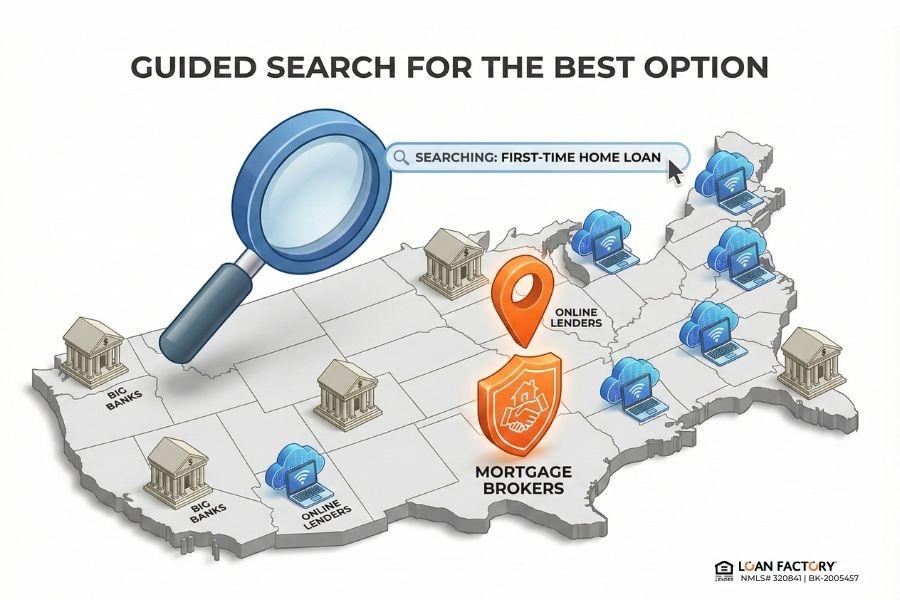
Search for Brokers in Your Area
You can start with online searches, recommendations from people you trust, real estate professionals, local community connections, or financial professionals. The CFPB recommends contacting multiple lenders and mortgage brokers when shopping for a mortgage rather than relying on only one option.
Florida is a large and varied housing market, so local experience can also matter. A broker who regularly handles Miami condos may have different experience from one who mostly works with buyers in suburban Orlando or Tampa.
That does not mean you need a broker located around the corner. What matters more is whether they are properly authorized, responsive, and experienced with the type of transaction you are considering.
Check Licensing Before Moving Forward
This is one step worth taking before you send personal financial information to anyone.
Florida regulates mortgage brokers and loan originators under Chapter 494. The Florida Office of Financial Regulation states that mortgage broker entities and loan originators have licensing requirements, with mortgage licensing applications handled through the Nationwide Mortgage Licensing System and Registry (NMLS).
You can use NMLS Consumer Access to check whether a mortgage broker, lender, or loan originator is authorized to operate in your state. The CFPB also recommends checking licensing information and looking for disciplinary history where available.
A professional website is not enough by itself. Verify the person or company independently.
Ask How Many Lenders They Work With
One reason people choose a mortgage broker is the potential to compare loan options from multiple lenders. A broker does not lend the money directly; instead, they can help borrowers find mortgage loans from lenders they work with.
Ask the broker how many lenders they regularly work with and whether those lenders offer the type of loan you need.
You can also ask whether they commonly handle conventional, FHA, VA, jumbo, investment, or other financing options relevant to your situation. The goal is not simply to find someone who works with “many lenders,” but someone whose lender network actually fits your needs.
Ask About Fees and Compensation
Do not be uncomfortable asking how the broker gets paid. Mortgage brokers may receive a loan-specific fee or commission, and the payment may come from the borrower or lender depending on the arrangement.
Ask for a clear explanation of:
- Broker fees
- Lender charges
- Origination fees
- Points
- Closing costs
- Whether the borrower or lender pays the broker
- Any other charges you may be expected to pay
A broker offering a seemingly attractive interest rate is not necessarily giving you the cheapest mortgage. The complete cost of the loan matters.
Compare Actual Loan Offers
Once you have narrowed down a few brokers, compare what they can actually provide. The CFPB recommends shopping around and comparing multiple mortgage offers rather than choosing based on one number.
Look at the interest rate, APR, monthly payment, upfront costs, lender charges, points, and cash needed to close.
A Loan Estimate is particularly useful because it gives you standardized information that can be compared with other offers.
This is where the difference between a good sales pitch and a genuinely competitive mortgage usually becomes much easier to see.
Pay Attention to Communication
Mortgage transactions involve paperwork, deadlines, documentation, underwriting questions, and plenty of back-and-forth. You want a broker who actually explains what is happening instead of disappearing after the initial conversation.
Notice how quickly they answer your questions. Do they explain unfamiliar terms? Do they tell you what documents they need and why? Are they willing to discuss different loan options without pressuring you?
Sometimes these small details tell you more about the working relationship than a flashy website does.
Watch for Red Flags
Be cautious if someone avoids explaining their fees, refuses to provide basic licensing information, pressures you to commit immediately, or makes promises about approval that sound too certain.
A broker should be able to explain the loan without making you feel rushed. You should also be able to understand who is involved, how the broker is compensated, and what you are actually paying.
Finding a mortgage broker is not really about finding the person with the most impressive advertisement. It is about finding someone whose licensing, lender access, communication, experience, and loan costs make sense for your situation.
Frequently Asked Questions
1. How do I find a mortgage broker in Florida?
You can search online, ask for referrals, contact local real estate professionals, and compare several brokers. After finding potential candidates, verify their licensing and compare their loan options, fees, and communication before choosing one.
2. How can I check if a Florida mortgage broker is licensed?
You can use NMLS Consumer Access to check mortgage brokers and loan originators. Florida’s Office of Financial Regulation also provides resources for verifying financial-services licenses.
3. Should I talk to more than one mortgage broker?
Yes. Speaking with multiple brokers can help you compare lender access, rates, fees, loan programs, and service. You can also compare broker offers with direct lenders.
4. What should I ask a mortgage broker before hiring them?
Ask which lenders they work with, what loan programs they offer, how they are compensated, what fees you may pay, how they handle your type of transaction, and how they will communicate with you throughout the mortgage process.
Final Thoughts
The right mortgage broker should make the financing process easier to understand, not more complicated. Take time to verify licensing, ask straightforward questions, understand the compensation structure, and compare actual loan offers. A broker may be helpful when you want access to different lenders, but the best choice ultimately comes down to the overall mortgage terms and the quality of service you receive.